

Our Vision

The Education for Sustainable Living Program envisions a world where individuals, governments, companies, corporations, educational institutions, and other organizations operate with sustainable practices, and appreciate the ways in which we are all interconnected. We see the present as a time of great action and change towards a planet where environmental cost and social costs are taken into consideration with financial bottom lines.

Sustainability
Ensuring a high quality of life for future generations requires respect for all living things, awareness of limited resources, and the integration of social, economic, and environmental practices, with education playing a key role in promoting sustainability.

Horizontal Learning
This structure is a primary focus in our created courses and organization. It refers to dismantling power dynamics seen in academia. We implement this structure into our org by embracing student agency, having discussion-based classes, and using a non-hierarchical system.
Facilitation
Differs from traditional teaching by guiding engaging conversations rather than telling the students what they should know. This includes collaborative learning and empowerment by not giving the power of credentials to determine eligibility.
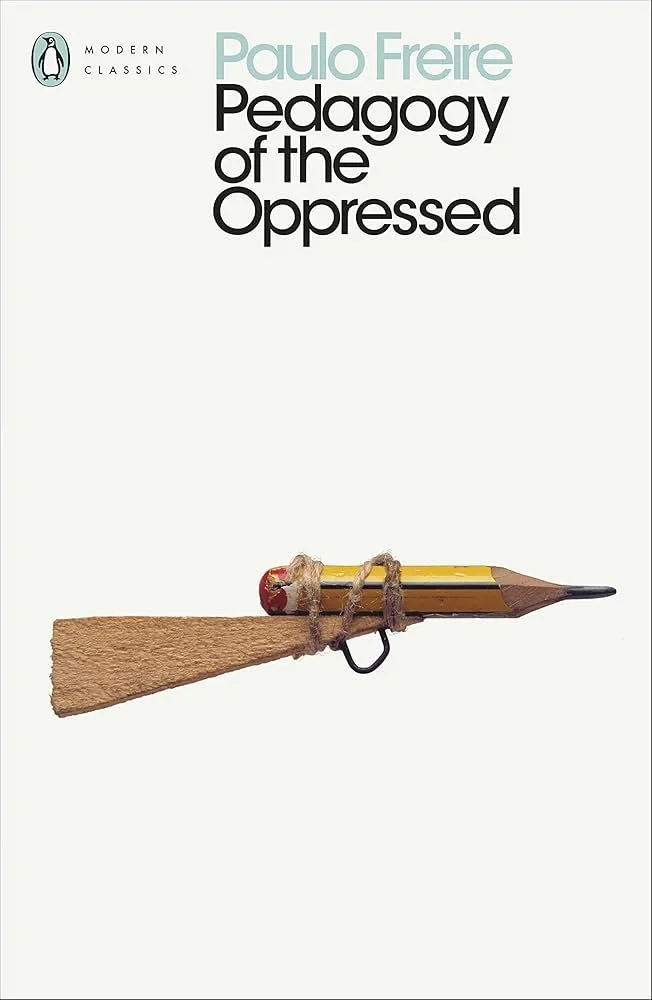
Pedagogy of the Oppressed
This is the book that influences ESLP’s core values regarding to power dynamics within academia and carrying out horizontal education. It discusses the teacher vs. student relationship in education and works to discuss and dismantle these hierarchical structures.
Banking method of education: This is a method heavily criticized in chapter 2 of the book (pg. 72). The concept imposes ignorance on students and presumes teachers as knowledgeable. It treats students as deposits to be filled with whatever “truth” they’re taught by educators to make them adaptable members of society.